Best Fairway Drivers Disc Golf Reddit at Best
Round Two Recap.
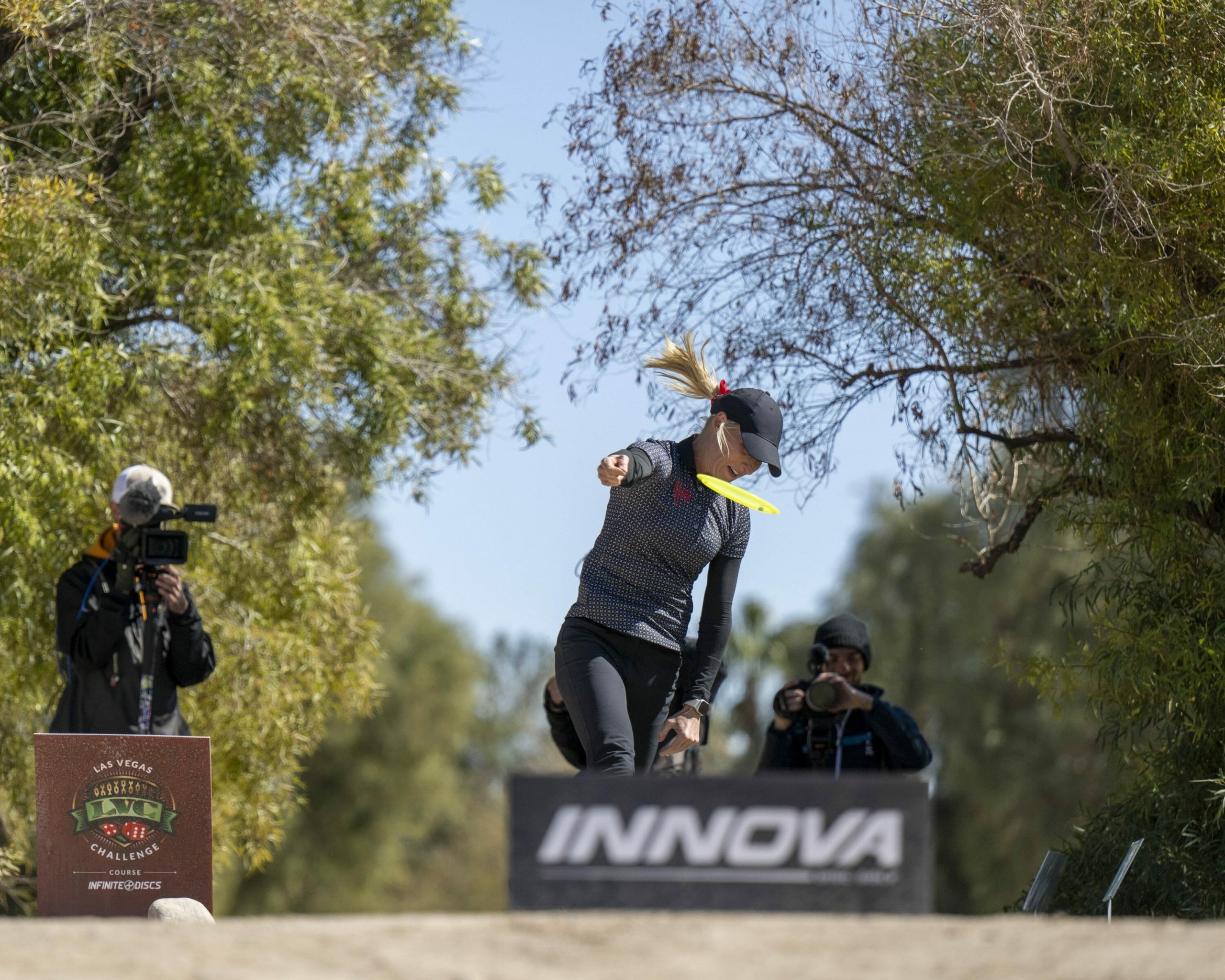
On the Innova course for day two of the Las Vegas Challenge, somebody hit the jackpot.
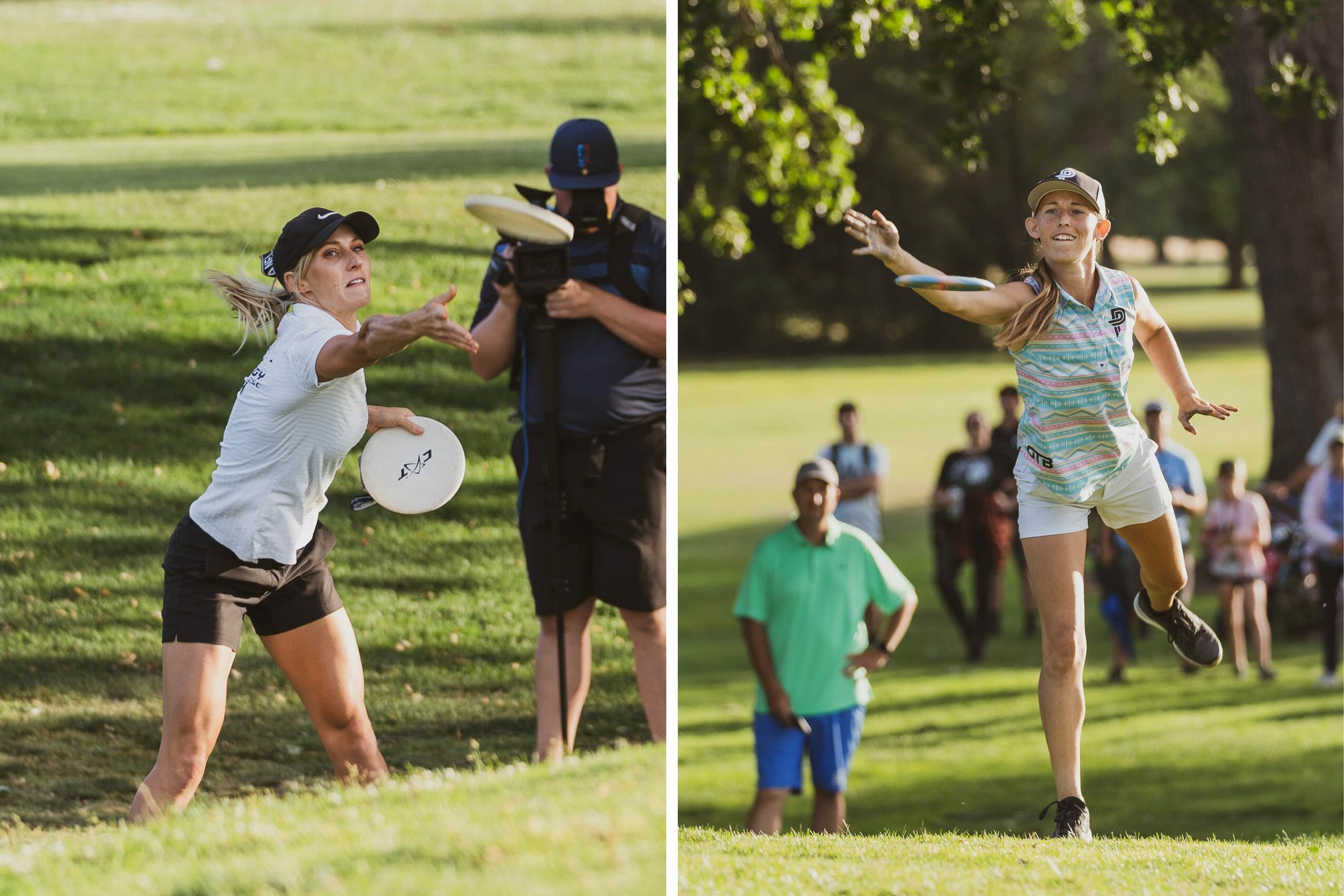
After a steady battle through the first round, Catrina Allen lighted up the score card to surge into a commanding six stroke lead thanks to an 11-under round moving her to 19-under on the tournament. For the second straight day, she shot the hot round, this time blemish free.
🔥 round from @catrina44184
– 1015-rated 11-under
– 100% inside the circle
– 40% C2 putting
– Bogey free
– Six stroke lead— Ultiworld Disc Golf (@UltiworldDG) February 25, 2022
After avoiding OB and bogeys on the first day, Paige Pierce could not replicate the same performance. Her roller coaster round was punctuated by two eagles, but she was plagued with four OB strokes that led to three bogeys. She sits 13-under par and tied for second with Kristin Tattar.
A double bogey early in the round can be the beginning to the end, but Kristin Tattar only used it as fuel. After a double on hole three, Tattar hopped on the birdie train with four in a row including an eagle. Her 7-under par round bested her first day score to find her at 13-under par and tied for second.
Eveliina Salonen, sitting at 12-under after a 7-under on Friday, rounds out the lead card on moving day.
Natalie Ryan, who started the day on the lead card with a great round on Thursday, had to withdraw from the tournament after pulling her hamstring, a disappointing result after such a great start.
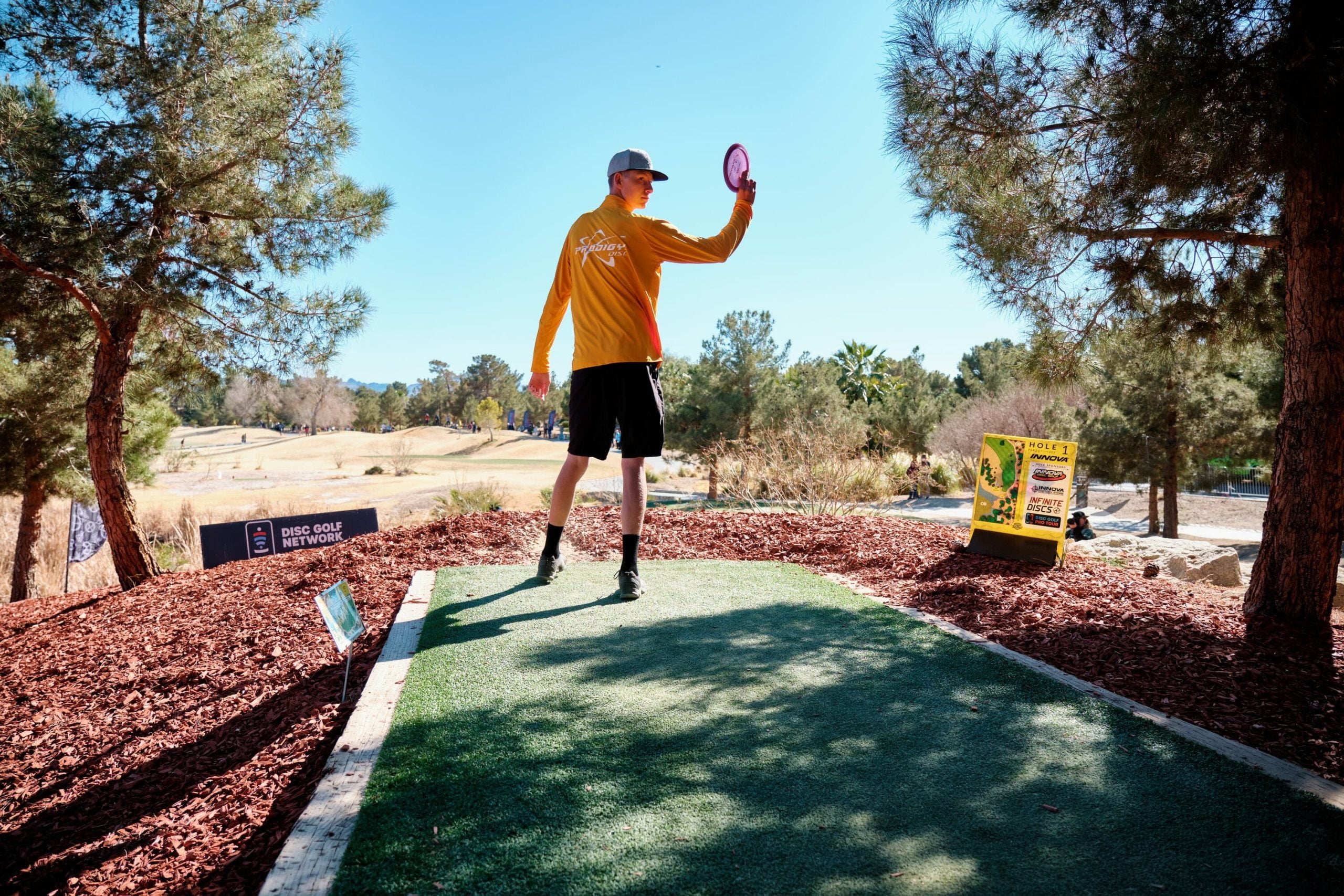
The shot of the day is credited to Kristin Tattar on hole 5. Her forehand approach shot put her within five feet of the basket for a drop in eagle on the 666 foot par five:
Tattar Approach
Round Two LVC FPO Highlights
The hot round of the day, of course, was laid down by Catrina Allen with an 11-under par 58. Two days in a row, Allen has shown off her precision with her drives as she led the field in strokes gained tee to green at 7.19. Her 1015 rated round was the best FPO score on the Innova Course since Vanessa Van Dyken’s final round in 2019. Elite golf for Allen finds her with some elite company.
And how about this? Allen, playing the exact same layout as MPO (with a different par), outshot her boyfriend, Austin Hannum, who shot a 60.
Holyn Handley is not a name we hear of all the time at the top of the FPO division, but she has put herself into a sneaky seventh place. Her 6-under par round propelled her up to sole possession of seventh. The highlight of her round was seen on hole 10 where she eagled a 721-foot hole while putting it in from only 16-feet out. After a rockier front nine, she finished her back nine blemish free, going 5-under and earning a spot on the chase card.
The award for biggest mover of the day goes to Canada’s own Julie Moens. The ultimate frisbee player has brought her talents to the disc golf course and shot a scorching 9-under par, the second best round of the day. She jumped 32 spots in the rankings, tying her for 15th at 4-under par. She played nearly flawless golf with 10 birdies and just a lone bogey. Her putting was also perfect where she finished 100% from circle one.
“I just feel good. I’m feeling confident and that feels really good. The last three years I kind of struggled at that throughout certain tournaments. I just want to feel comfortable and confident and I like this course” -Catrina Allen after holding a six stroke lead after day two
Hole 5 plays as a 666-ft par five for the women and only saw three eagles on the day. Interestingly enough, all three came on the lead card. Tattar, Allen, and Pierce were the three to card eagles, putting from distances of 5, 16, and 38 feet, respectively.
Scores stay tight through round two.
The cream rose to the top on Friday at the Las Vegas Challenge, as four players with bogey-free rounds ascended to the lead card with two rounds to play. Not only were the top four playing clean golf, they were playing exciting golf, with no player shooting less than a 9-under on the day. Calvin Heimburg and Gannon Buhr are tied at the top at 19-under with Drew Gibson and Anthony Barela one stroke back, rounding out the lead card.
Gannon Buhr may be the story of the tournament thus far, carrying his 2021 Rookie of the Year campaign momentum into the new year. Buhr has been a sniper thus far from range, converting 57% of his attempts from outside the circle on day 2, and 50% on the weekend thus far. Combine that with his incredible power upside and a clearly improved scramble ability (100% scramble today), and you get one of the most threatening players in the division. Gannon Buhr was the only survivor from the Round 2 lead card; as his cardmates dropped around him, he stayed resolute and is poised to challenge for the first title of his career.
#ContractYearCalvin is also in full effect, and it’s not hard to see why. It’s not that Heimburg is succeeding solely due to the wide open space afforded to him by the golf courses in Vegas — he’s still throwing the pinpoint, frozen rope drives that he’s known for, just out in the open. The open air may reduce the spectacle of an Eagle making a beeline toward the basket, but what Heimburg is doing remains impressive. His up-and-down putting continues to be a factor. He was 0/5 on C2 tries on Friday and had two misses inside the circle, but Heimburg’s play away from the green is so strong that he can stay in the hunt. If the putter ever reaches the highs of the late 2020/early 2021 range for Calvin, look out.
Drew Gibson fought his way onto the lead card with a stellar 13-under effort. It was a flash of Gibson’s best potential on Friday, as he paired his typical ridiculous driving accuracy and power with a great putting day. However, some of his most impressive shots were between the tee and the green: his upshot on the 14th may have looked routine, but putting his shots under the basket consistently will alleviate the pressure Gibson can face on the green. This style, of course, benefits a bomber, but Gibson’s whole game looked amazing on Friday, trees or not.
It’s been a whole offseason since we saw Drew Gibson call a rare time violation on Gannon Buhr at the Pro Tour Championship, and now they’re back on a card together. Buhr was clearly rattled last time the topic came up during a round, wavering in his mental game after taking too much time on his putts. He has reportedly been working on playing faster over the offseason, and Gibson clearly has shown he will stick to the letter of the law during a round if he feels something is amiss. Something to keep an eye on as we enter moving day.
During the middle of coverage, Philo Braithwaite noted that hole 8 on the Innova course barely squeaked over par on average, the only hole to be playing over par at the time. This didn’t hold true, with the highest, Hole 18, coming in at +0.3 on average, a far cry from the toughest challenges the pros will face on tour. It isn’t solely a byproduct of golf course-based tracks: the OTB Open manages to be a tough hill to climb with largely wide open airspace. And the weather wasn’t incredibly still on Friday, providing at least some resistance in the way of disc selection.
While watching the pros card birdie after impressive birdie is certainly good television, there’s something to be said for the tougher courses later in the tour that require more shot shaping.
Drew Gibson’s 1091 rated round is the 3rd highest rated round of his career and his best since the 2017 Memorial final
— PDGA Stats (@PDGAStats) February 26, 2022
Additionally, if Drew had converted near-miss putts on Holes 16 and 18, he would have reached the 1100 mark.
Drew Gibson’s drive on the 457 foot par three 17th:
Drew Gibson Drive
“I was two shots away from 10-under yesterday. I had a three putt bogey from a 20 foot birdie putt, and on the triple island hole, I threw my first drive almost perfect and was out of bounds long. So I ended up double bogey, bogey there, so that’s five strokes. So I wasn’t playing bad yesterday. So I wouldn’t say anything changed, I just didn’t catch some bad breaks or have some unfortunate things happen. I’ve been playing good all week.” – Drew Gibson on the difference between Round 1 and Round 2
Drew Gibson has fond memories of the Factory Course from his 2021 tournament, nearly shooting the hot round last year, setting him up for a great opportunity to take down the LVC crown this year, especially with another round on the Innova course coming up on Sunday. Gibson hasn’t seemed to slow down a step since his surge in the back half of 2021; starting his season with perhaps his biggest tour win would set the tenor for his 2022 campaign and the next phase of his career.
TAGGED: DGPT Elite Series, 2022 Las Vegas Challenge, Anthony Barela, Calvin Heimburg, Chris Dickerson, Drew Gibson, Eagle McMahon, Gannon Buhr, Las Vegas Challenge, Linus Carlsson, Peter Lunde, Seppo Paju
Hermitage Members Club courtesy photo.
by C.B. Hall, VermontBiz Having faced down a pandemic and its side-effects for two full years, all of Vermont’s downhill skiing areas remain open – and they’ve done it with a wide variety of business models.
The pandemic years even witnessed birth of a new ski resort enterprise in Wilmington, where the Hermitage Club had closed down, in 2018, with a figurative mountain of debt to match its actual mountain. Just launched a new club.
Just as the pandemic was taking hold in March 2020, when a group of the defunct club’s members banded together and bought the ski area for a bit over $8 million at a bankruptcy auction. Nine months later, the new Hermitage Members Club opened on the Haystack Mountain property, as a nonprofit, member-owned and -governed club.
Under the watchful supervision of general manager Bill Benneyan, the new entity (still referred to as the Hermitage Club on its website) “divested all its non-core operating assets,” in his words. He referred to the golf course, four inns and other peripheral activities that had saddled the old club.
He said the resort, which is open only to members and their guests, “is focusing on great skiing and a great club experience.” It already has 325 memberships, up from 180 when it rescued the resort from the scrap heap two years ago.
“We’re adding members every week.” We’re at least two years ahead of our financial growth plan,”
The club’s membership is not huge, but its size works to the resort’s advantage in some ways. While Mount Snow, just a couple of miles to the north, is packing them in, Hermitage’s trails are far from crowded – which means, as membership development lead Lars Pedersen explained, “There’s less friction from skiers, which means higher surface snow quality.”
The resort’s limited hours – Friday, weekends and holiday weeks – give the resort another advantage: Snow-making is conducted on 85% of the terrain, and the Monday-to-Thursday hiatus. That means there’s plenty of time to “curate the snow,” in Benneyan’s words.
Alluding to this season’s lack of snow, Pedersen conceded that “it’s a funky winter,” but emphasized that “overall, things are going really well.”
At least two other resorts, Barnard’s Twin Farms and Quechee’s Quechee Club, also offer downhill skiing on a club basis, although on a much less conspicuous scale than the words ski area bring to mind.
The term is in fact somewhat misleading in today’s business context. Most of Vermont’s other ski resorts across the state make full use of their opportunities and attributes to provide fun and make money year-round, swimming, mountain-biking, fitness clubs, zip lines, golf and other attractions too numerous to mention keep the resorts going through the snowless months from Hermitage in the south to Jay Peak in the north.
“Some Of The Best Numbers In Our History”
Jay is among the biggest and most established players in Vermont’s winter recreation sector, but it entered terra incognito when the EB-5 visa scandal erupted in 2016.
Both Jay and Burke Mountain – then Q-Burke – came under the control of a federal receiver in Florida and their owners, Bill Stenger and Ariel Quiros, were indicted on multiple federal counts.
In 2018, the two ski areas were put up for sale, and as of this writing, Jay Peak was still on the market. The status of Burke was less clear, as VBM’s inquiries had not received a response by press time.
The sale process has not been simple.
“In the spring of ’20 everything stopped because of the pandemic,” JJ Toland, the resort’s communications director, said in a February 14 interview. “It wasn’t until last spring that things started to thaw, where we had interested parties come and scratch and sniff what we might be about. It’s been a slow process, finding someone who wants to invest eight or nine figures in a ski resort.”
“There are two viable contenders, I would say, that are at the 20-yard line.”
Meanwhile, business has been business.
“Kind of the corporate structure, for lack of a better term, is the federal receiver, Michael Goldberg, at the top, and he hired Leisure Hotels and Resorts to manage [Jay],” Toland said.
The Kansas-based company, in his words has been “fantastic in terms of laissez-faire with us, and let us continue to manage resort operations – because we’ve been generating revenue and bringing profits to the bottom line at historic levels. We posted some of the best numbers in our history over the last six years.”
Then there’s the pandemic.
Heading into the current season, he said, Jay “struck any Canadian patronage out of our budget. That was a gut punch just from an emotional perspective, since Canadian visitorship has historically made up 50 percent of our revenue and visitorship. [but] from a revenue perspective, we’ve seen the US market make up a large chunk of that. We’re running about 35-40 percent ahead of where we thought we would be from a revenue perspective.”
In terms of skier visits, he said, Jay is off only about 22% from the figure for 2018-19, the last pandemic-free season.
His optimism got a boost on February 15, when the Canadian government announced that, effective February 28, it would ease COVID-related restrictions on travelers entering or reentering Canada from the United States.
“What that means for us is that people can come for the weekend.”
Addressing another problem, seemingly ubiquitous these days, he said, “Staffing has been a challenge but not as large as has been reported for other players in the industry. We’ve done a great job of retaining staff with housing, bonuses, simple perks, lunches together, parties together for those who stuck with us through the receivership and then the pandemic.”
The upshot: “We have the most cash on hand that we’ve ever had in our history. We’ve done a good job in generating revenues and a fantastic job at managing expenses, and that really is a testament to our staff.”
Prospects Looking Up
Activity at the Green Mountain State’s winter resorts “definitely seems more this year than last year,” in the opinion of Geoff McDonald, co-owner of Burlington-based Ski the East, which sells outdoor winter apparel and accessories and puts out promotional literature for eastern ski areas.
“Lift capacities are back up to full. That brings a lot more people out to the hill – lift lines are not as long.”
At Ski the East, he said, “business has been great. We were well situated for the pandemic in that we sell primarily online.”
The firm’s total volume is up at least 50 percent relative to 2018-19, he said.

Sugarbush North has upgraded its lodge inside and out following its acquisition by Alterra. The adjacent Vermont Adaptive space is new, spacious and accommodating. VermontBiz photo.
“Brick and mortar stores are having their best ski season ever… Despite the supply chain issues – which we’ve been experiencing, too – we hear that some stores haven’t seen a surge like this since the ’80s.
“A lot of people were forced to look for things online. That’s bumped up the volume. And more people are wanting to purchase from local companies… I think people have gotten a little jaded with the Amazon experience.”
At Ludlow’s Okemo Mountain, one of the seven Vermont ski areas that operate under chain ownership, prospects are looking up, too.
“I think it’s a reaction to COVID,” communications manager Bonnie MacPherson told VBM. “People have been cooped up a long time. Demand is very high, at least in Vermont.”
“Many of the [COVID] restrictions that we had in place last year have been lifted this year… There are no masks required outside anymore, but we still require them inside. We’re requiring vaccinations in our cafeteria-style dining areas, because of the density of those spaces. In full-service eating areas we don’t require that.”
While the pandemic may be loosening its grip, the weather has had its moods.
“It was a slow start to the season in terms of Mother Nature’s cooperation,” she said. “It was kind of give-and-take in terms of having enough snow.”
In a February 7 interview, she said the mountain had had “enough snow to be pretty much close to completely open.”
Mad River Glen: A Road Less Taken
Okemo is owned by Vail Resorts, whose portfolio of 40 winter sports venues also includes Mount Snow and Stowe Mountain Resort in Vermont, as well as 37 destinations across the country, and in Canada and Australia.
Colorado-based Vail Resorts is one of the three US corporations with increasing dominance in the winter resort sector.
Utah-based Powdr Corporation owns 11 resorts, including Pico and Killington, while Alterra Mountain Company, also headquartered in Colorado, owns Stratton and Sugarbush as well as 12 other destinations across the country and one in Canada.
That leaves quite a few of Vermont’s 20-odd ski areas with other ownership models, and their variety suggests that the sector thrives on a diversity of business approaches that are suited in each case to the venue’s particular needs and traditions.
While Hermitage is thriving as a private club, and Jay operates on under the control of a receiver, prominent among the other models is Mad River Glen.
The Fayston resort, which has been welcoming lovers of the white stuff since 1948, has followed a road less taken.
Pictured on the MRG website, the message on the reader board at the entrance to the resort on Route 17 thumbs a figurative nose at the industry consolidation: “Still single after all these years.”
The Ski Vermont website notes that MRG “is one of only three areas in North America that prohibit snowboarding.”
The resort’s website states that MRG “is the only ski area in the nation on the National Register of Historic Places.”
While artificial snow is a mainstay of the industry – and the recently concluded Winter Olympics relied almost entirely on artificial snow for its alpine events – snow-making at MRG is minor, limited to the hill’s lower reaches, resort general manager Matt Lillard said in a recent interview.
Lillard also told VBM that the resort is the only US ski area organized as a cooperative, currently comprising 1,800 individual skier-owners.
Depicting the contrast with corporate ownership, he said, “Our mission is different. It’s not to make a profit. It’s to preserve and protect the Mad River skiing experience.”
That’s been the modus operandi since 1995, when the former owner, Betsy Pratt, decided to sell the property, in the website’s words, “to the only people she felt she could trust: Mad River Glen’s loyal skiers.”
By corporate standards, MRG’s operation is modest.
“We generally operate in the red 75 percent of the time,” Lillard said. The flush years cover the deficits from the lean ones.
“Our goal is to cover our capital needs and our reserve needs. If we make enough of a profit for capital needs and reserve needs, we make a patronage fund [but] that has never happened yet. All the money has gone back into the mountain.”
The capital program is likewise modest, amounting to $50-100,000 in most years.
“It’s been a little bit larger these last couple of years. We went to a capital campaign and got $5 million, so we invested a lot.”
The Nonprofit Model
It’s not as if Mad River and the private clubs are the lone exceptions to the large scale of areas such as Killington and Sugarbush.
Even among the state’s smaller ski areas, there’s quite a range of models.
At its Hard’ack Recreation Area, the City of St Albans provides a hill with a vertical drop of only 100 feet, but people do ski down it.
Hard’ack also offers cross-country skiing, snowshoeing and, in the summer, hiking trails and disc golf, all sustained by donations, fund-raising events, and rental of the recreation area’s lodge.
On the other side of the state, the nonprofit Lyndon Outing Club operates a small slope entirely with volunteers in the eponymous town.
But the club does not make snow, and the hill was however closed on Presidents Day Weekend because of a lack of the white stuff – a chronic affliction that the enterprise, according to its website, has survived repeatedly since it opened in the late 1930s.
In Corinth, Northeast Slopes, which like the Lyndon club is an all-volunteer nonprofit and does not make snow, was also closed on the holiday weekend, and for the same reason.
“A few times a year Mother Nature reminds us who’s actually in charge around here,” a post on the ski area’s website philosophized.
West Windsor’s Ascutney Outdoors, likewise an all-volunteer, all-natural-snow nonprofit, was also closed on Presidents Day Weekend after the preceding week’s watery assault from the skies.
In a February 21 phone interview, Ascutney Outdoors’ pro-bono executive director, Glenn Seward, brushed off the weather issue.
“We’re closed now, unfortunately, but we’ve got more weekends ahead of us, for sure.
“We have a keen eye on financial sustainability, and snow-making does not fit into that picture,” he addressed an obvious question. “If we have 12 inches of snow on the ground, we’re doing really well. We make do with very little, money-wise and snow-wise.”
Operations depend on a cadre of more than 100 volunteers.
“It essentially takes, depending on what we’re doing, roughly 20 to 30 volunteers a weekend to make the wheels turn,” Seward said.
“We look to our operations to sustain the overhead,” he told VBM. Revenue comes from day tickets and season passes.
During the “very busy” warmer months, income has come from rental of the property for such things as weddings, reunions, an outdoor drama presentation by the Weston Playhouse, and a mountain-bike competition that drew 1,500 riders to the property’s 40 miles of trails.
“In a year like this, when things aren’t so good weather-wise, we’ll look to donations to sustain the operation,” he added. Annual fund drives have been “very successful.”
“We try to maintain a reasonable rainy day fund,” he continued, with apt double entendre. “We survive by being very fiscally prudent.”
Then there’s Cochran’s Ski Area, the legacy of a family that has placed six of its members on the national ski team, with two Olympic medals to their credit – the more recent one belonging to Ryan Cochran-Siegle, who took a silver in the Super-G at the Beijing games on February 8.
The Richmond ski area began as a backyard project in 1961 and grew from there, becoming a 501(c)(3) nonprofit under the IRS code in 1998, and announcing its mission as providing ‘area youth and families with affordable skiing and snowboarding, lessons and race training, in the Cochran tradition,” in the words of the ski area’s website.
As for the business approach, the website tells us, “Mickey and Ginny Cochran operated their backyard rope-tow with the support and commitment from the local community. Working together each year to cobble together the people, machinery and never-quite-enough-snow, they were able to introduce countless kids to a favorite Vermont winter pastime. ‘It was always a non profit,’ Mickey’s son Bobby likes to joke, becoming a 501(c)(3) just made it official.'”
So, among Vermont ski areas, small works, too.
Typical of the nonprofits are a reliant on volunteers, limited hours of operation, relatively simple lift technology, and a lack of snow-making equipment – or, in more positive terms, a reliance on Mother Nature for the primary resource.
On that basis, Ascutney Outdoors is operating for its fourth season, while Cochran’s, Northeast Slopes, Hard’ack and Lyndon have all survived the vagaries of nature and many another challenge, albeit with some changes in structure, for more than a half-century.
Sustainable, But For How Long?
The warm, spring-like deluge on the eve of Presidents Day Weekend and the mid-winter school break is hardly good news for skiers or ski areas. While it shut down some small areas, the news was not quite as bad at big winter resorts with plenty of artificial snow and/or alternative attractions – Jay Peak’s water park comes to mind – to keep the arriving throngs happy.
Still, the specter of climate change haunts the sector.
A rainy winter leaves one wondering how many Vermont ski areas will fold up as the climate warms, threatening an even more meager accumulation of the white stuff in the years and decades ahead.
Can the little areas survive?
“Certainly when you look at the capital needs of the business, those that have more resources have access to more snow-making and things like that,” Ski Vermont president Mary Mahar said.
“The ski areas have become more sustainable in their operations. Snow-making has transitioned into more electrification. They used to depend on diesel compressors… The technology has really transformed and become much more efficient.”
It has also reduced operating expenses.
“We’ve been making snow at every single opportunity, given the weather,” Okemo’s MacPherson said, exemplifying how big ski areas react when natural snow doesn’t suffice.
Small ski areas have their own reasons for not making snow – and in any event snow-making requires cold weather much as the real stuff does.
As civilization continues to stumble in its attempts to stop the climate-change juggernaut’s progress, the fundamental question thus remains: Can snow-making bail out ski areas that find themselves increasingly abandoned by Mother Nature? How vulnerable, and how increasingly vulnerable, are Vermont ski areas to that juggernaut?
Mahar approached the question politically, “It’s really important that the country gets to some climate solution. That’s really going to move the needle. If we were to hit all our emissions targets in this state, and nothing happens in the rest of the country, we’re really not going to get there… We really need a bipartisan solution to climate in the country.”
Turning to other issues that face the industry, she recalled the pandemic-enforced shutdown of the state’s ski areas in March 2020 as “pretty difficult.”
“The next, following year was difficult because we were operating under state guidance. The biggest hurdle, I think, was the interstate travel requirements. People were expected to quarantine when they came into the state. For an industry that gets the majority of it patrons from out of state, that was challenging.”
Secondary lines of business within the industry, as opposed to the core business, “were impacted more – lodging, food and beverage, for example,” she said. “We’ll probably see that food and beverage will still be affected to some extent by the lingering impacts of the pandemic.”
Then there’s the workforce issue.
“We’re looking at areas that are using more automation in their systems – technology is a better word,” she said. “It’s a trend that existed before the pandemic, but it was accelerated by the pandemic.”
“Over the past decade-ish we’ve been using international workers as a help for our workforce, and that was impacted just because of the widespread workforce challenges. There’s a lot more pressure on getting those visas… We’re working with the National Ski Areas Association on trying to get access to more of that labor.”
Whatever the multitude of hassles in recent years, she was sanguine.
Among the states, she noted, Vermont’s winter resort sector typically ranks fourth in size, behind Colorado, California, and Utah.
“We slipped back to fifth place behind New York [last year], and that was directly attributable to the interstate travel requirement.”
Compared to Vermont, that is, far more prospective patrons could reach New York ski destinations without crossing a state line.
She saw the current season as something like a turning point, “Anecdotally, in talking with our operators, it’s been a good season. It was a slow start, but certainly being able to welcome people back from other states was huge.”
“We fully expect that we’ll regain our number-four status.”

The disc golf community is passionate, to say the least. Many actually travel to different cities and countries to play on popular courses — and several of the most popular courses are here in the Charlotte area.
Why it matters: Disc golf is a sport that virtually anybody can play. “The barrier to entry is very low,” explains David Weaver, member of the Charlotte Disc Golf Club and disc golf enthusiast.
Driving the news: A new course opened at Eastway Regional Recreational Center in November, as part of the rec center’s $40 million renovation project.
“It’s a huge hobby for people, supported by free public infrastructure in these public parks,” says Joseph Phillips, co-owner of Another Round Disc Golf and Tap Room.
Flashback: Thanks to early adopters of the sport who saw its potential, Charlotte has been on the disc golf map since the early 1980s.
It’s more than just a game for some people. This year, for the fourth year in a row, Charlotte will host one of the biggest disc golf tournaments in the world: The Disc Golf Pro Tour Championship (DGPT), which attracts around 2,000 people to the city each year.
“Out of all the places I’ve played at, Charlotte is my favorite,” says Weaver, who has played in courses in 48 states, and Canada.
The big picture: Disc golf is going through a boom right now, but according to Phillips, “we’re actually in the infancy of its real growth.”
Phillips and his college roommate—now business partner— Kyle Deck bought Another Round from its previous owners back in 2019. The business wasn’t doing so great but they took a calculated risk.
How it works: Like regular golf, you win disc golf by having the lowest number of total shots. Except, unlike golf, you’re throwing a disc instead of swinging a club. And you’re trying to land it in a basket, instead of a hole in the ground.
Of note: A disc resembles a frisbee but to be clear, a disc and frisbee are not the same. “It would be like playing lacrosse with a tennis ball,” Axios’ Ashley Mahoney explains.
Where to play: Phillips recommends Kilborne District Park and Eastway, Weaver recommends the Hornets Nest.

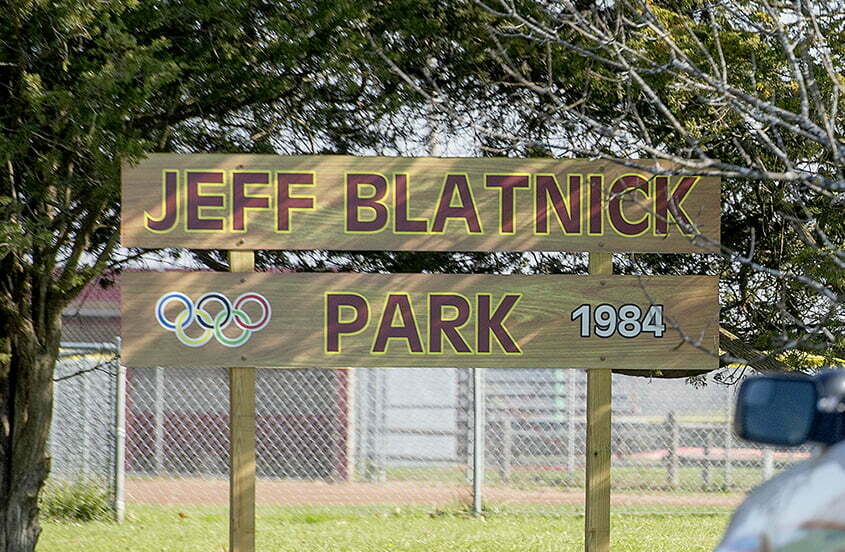
NISKAYUNA — The Niskayuna town committee overseeing environmental conservation will review a proposed idea to keep areas of the town’s capped landfill, now Blatnik Park, as a low mow area to allow grassland birds and pollinators to thrive.
Resident Roy Thorton presented the idea during Tuesday’s town board meeting.
“Pollinators and other butterflies and wild bees and so on are in trouble and the capped landfill can provide them with pesticide free living and dining,” Thornton said at the meeting Tuesday. “Grassland birds are also on the decline in the Northeast. There’s a variety of those and the capped landfill can provide the tall grass, enough acreage and undisturbed nesting for successful nesting.”
Thornton said Friday his advocacy started around 10 years ago in 2012 when he and his wife were walking around the landfill and saw a bobolink, a small blackbird. He said they are a marker species for grassland birds.
Not long after seeing them, he said, the town began mowing the area again and often enough during the summer that it wasn’t possible for most grassland birds to survive. After that he began advocating to have areas for the birds to prosper.
Town officials love the proposal.
“I think it is a great idea,” said board member John Della Ratta.
He said he’s already discussed the concept with town Highway Supervisor Ray Smith and plans to talk about it more at the Economic Development, Historic Preservation and Environmental Conservation Committee on March 4.
Town Supervisor Jaime Puccioni also supports the initiative. The town’s Conservation Advisory Committee has also been active in preserving natural habitats in town, she said.
“In the case of this particular location I am aware that the Council/Committee is balancing the benefits of enhancing a habitat for pollinators and grassland birds with other uses for the area as a walking trail with a beautiful overlook and location for holes on the disc golf course,” she said.
Puccioni said she has low mow areas of her own backyard to help birds and bees prosper that includes wild clover, natural grasses, wild flowers, shrubs and trees.
Thorton also has the support of about 30 other people, the Hudson-Mohawk Bird Club, the Environmental Clearinghouse of New York and Nicholas Klemczak, the executive director of the Schenectady County Soil and Water Conservation District.
Reporter Shenandoah Briere can be reached at 518-478-3320 and by email at [email protected]
Categories: News, Schenectady County, Your Niskayuna
News Release
February 3, 2022
Today, Toronto City Council received the findings of an external review of City of Toronto golf operations and adopted recommendations for an improved operating model, enhancing complementary uses and public access and expanding and improving golf programming.
Five City-operated golf courses – Dentonia Park, Don Valley, Humber Valley, Scarlett Woods, and Tam O’Shanter- will be operated under a hybrid model wherein the City retains responsibility for maintenance and approval of green fee rates, while pro shop and food and beverage operations are provided by a single private contractor. This model provides safeguards for access, affordability and financial sustainability while leveraging private sector expertise. A negotiated Request for Proposal (nRFP), which provides for a flexible approach to procurement, will be issued in the second quarter of 2022, with an operator selected in time for the 2024 season. Indigenous economic opportunities will be incorporated as a scored element for consideration in the nRFP process.
The improved hybrid model will provide improvements in customer experience, environmental stewardship, financial performance, and recreational opportunities.
Council also directed City staff to maintain the existing 18-hole golf course structure at Dentonia Park Golf Course, while continuing to explore opportunities for further year-round recreation, multi-use arrangements, increased accessibility and affordability for golf use, and access to Taylor Massey Creek trail ravine.
In order to support expanding access to and improving golf programming, the Welcome Policy, a fee subsidy for recreation programs for families with low incomes, will now be made available for junior golf memberships. Staff will develop strategic partnerships that focus on youth programming and expanding access to the sport.
Staff will also work to develop programming and engagement opportunities to increase access to golf for equity-deserving groups, and will continue to enhance off-season public access to the courses and expand complementary in-season programming. In recent years the City has added a number of off-season and after-hours uses for the courses that include winter snow loops for snowshoeing, fling golf and disc golf. Complementary uses will also focus on opportunities for enhancing environmental stewardship, growing the urban forest, restoring natural areas, and improving ravine access and trail connections, in alignment with the City’s Ravine Strategy and Parkland Strategy.
Staff recommendations were informed by extensive public consultation with golfers and non-golfers, and included focus groups, a city-wide virtual meeting, five local community meetings, a market sounding with golf operators and a presentation to the Aboriginal Affairs Advisory Committee. More than 7,000 people were reached as part of the review’s public engagement program.
Despite a shortened season due to COVID-19-related closures, increased demand for the sport in 2021 resulted in golf courses’ best year performance since 2013, with over 195,000 rounds played in 2021. This upward trend in golf rates of play was experienced across the country, and reinvigorated interest in the sport.
The City is committed to offering affordable and accessible outdoor recreation options. Toronto’s courses are all affordable, high quality and TTC-accessible. Information on the courses is available at toronto.ca/golf and details on the review of golf course operations can be found on the City’s website.
“Throughout our pandemic response, we have done everything we can to provide more access and opportunity for people to get outside and be physically active. Maintaining City golf facilities in a prudent way that delivers a better experience for golfers, supports affordable access to the game for Torontonians and expands opportunities for how we use these spaces year-round is the right thing to do. Providing public access to these areas, primarily in the off-season, creates more opportunities to be outside and active, including for hiking, running, snow-shoeing, or cross-country skiing.”
– Mayor John Tory
“Toronto’s golf courses are all affordable, high quality and TTC-accessible. Each course has unique characteristics and offers something for all skill levels. These improvements to the operating model will provide more opportunities for participation and help make these courses more financially and environmentally sustainable.”
– Councillor Jennifer McKelvie (Scarborough-Rouge Park), Chair of Infrastructure and Environment Committee
Toronto is home to more than 2.9 million people whose diversity and experiences make this great city Canada’s leading economic engine and one of the world’s most diverse and livable cities. As the fourth largest city in North America, Toronto is a global leader in technology, finance, film, music, culture and innovation, and consistently places at the top of international rankings due to investments championed by its government, residents and businesses. For more information visit the City’s website or follow us on Twitter, Instagram or Facebook.
A big topic on everyone’s mind over the past few months has been “When is this weather going to let up?”
This winter season we’ve experienced multiple snow storms, the rising and falling of temperatures and now, this past week, an ample amount of rain and flooding. As someone who has lived in Tennessee his whole life, you’d think I’d be used to the unpredictability of such weather, but quite frankly it’s not exactly something one ever gets used to.
Sure, the running joke among Tennesseans is “If you don’t like the weather, wait a few minutes, and it’ll change.” While there is some truth to that statement, it still comes as somewhat of a surprise when you can experience all four seasons within a few day’s time.
It’s also an issue when you happen to live next to the river where the threat of flooding and the increased Riverside traffic of curious spectators becomes an annual tradition.
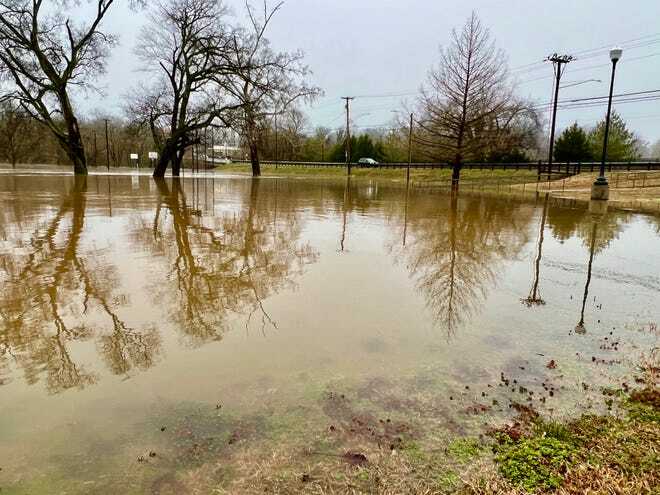
This year seems to be particularly bad, which has caused road and school closures this week due to the flooding. In fact, the waters were predicted to reach 41 feet, the highest crest in more than 75 years, compared to the previous recordings of 40.5 feet in 1946. However, according to Columbia Fire & Rescue, the river had reached approximately 39.02 feet by 11 a.m. on Friday.
While some roads remain dangerous and impassable, with a flood watch in effect throughout the weekend, I’m hoping this is the last of crazy weather we’ll experience this winter season. But, as always, you can’t get your hopes up.
However, being snowed or flooded in is a good opportunity to look forward to when the bad weather truly passes, making springtime all the more enjoyable knowing that it’s finally over, at least until next year.
Once we get beyond this weather and rain, there are so many good things on the horizon for Columbia that’s worth getting excited about. For one, it looks like we will actually get a Mule Day this year after having the last few years canceled due to COVID.
There are also many other events and businesses preparing for the warmer months, like live outdoor music, food truck festivals and opportunities for people of all ages to get out and have fun.
One regret I have from last year was not taking the opportunity to visit Fisher’s Off-Road Rentals, located just outside Columbia in Williamsport, where you can spend a day on an ATV cruising through some of the more rural Maury County landscapes, getting dirty and just having fun with friends on a not-so-traditional afternoon.
I’ve also been meaning to revisit the disc golf course at Woodland Park, which has undergone a few upgrades over the last couple of years and has become a popular spot for outdoor activity. Even if you don’t fancy yourself a pro, it’s a great way to spend an afternoon off the couch.
In the meantime, we’ll all just have to sit back, stay safe and wait for the waters to subside. It’s also a good time to appreciate the good times that are ahead once the time comes and know that this spring and summer will likely have much more to be excited about than we’ve had over the past few years.
It’s all about optimism in 2022, in my opinion, and sometimes it takes a slew of snow storms and flooding to make you really appreciate the good times that are yet to be had.
Jay Powell is a reporter for The Daily Herald. Contact him at [email protected] or follow him on Twitter @JayPowellCDH.
Round One Recap.
A brand new disc golf season got off to a familiar start, with Paige Pierce and Catrina Allen battling to the top of the leaderboard in a story as old as disc golf. Pierce and Allen are tied at 8-under, two strokes clear of Kristin Tattar and Natalie Ryan, who will round out the lead card for round two at the 2022 Las Vegas Challenge.
Kicking things off on the shortest of the three courses in play this weekend, the big arms still prevailed. Pierce and Allen displayed their confidence on the tees as putting specialists got left behind. Day two will be the first of the year where Pierce and Allen will meet on the lead card after being split for round one: Catrina Allen shot six strokes better than anyone on her card.
Pierce was more careful to avoid OB strokes than in LVC’s past and put together a bogey-free round, though she left strokes on the course in the back nine, where she managed to go just two-under. Allen had 10 birdies and a pair of bogeys, both from missed Circle 1 putts. She was one of just three players to avoid going out of bounds.
After nearly two years of not competing amongst the field, the Europeans have finally returned for competition and what a return it was. The lead card teed off with the reigning LVC champion, Paige Pierce, accompanied by Kristin Tattar (Estonia), Eveliina Salonen (Finland), and Henna Blomroos (Finland). This card had the highest average rating out of any PDGA FPO card ever, clocking in at 974.75.
Salonen and, especially, Blomroos showed signs of nerves early in the round. Salonen picked it up midway through the round and put together a solid 5-under performance. Blomroos never looked particularly comfortable on the green and shot just one-under.
What more is to be expected out of the first tournament of the year? There were some obvious jitters on the greens. Eveliina Salonen, Catrina Allen, and Henna Blomroos all finished the day at or below 50% from C1X, with Natalie Ryan just north of them at 64%.
Still, the Las Vegas Challenge is much more defined by play from the tee and the fairway: many of the day’s best putters finished well off the pace.
Catrina Allen holds the honor of the best shot of the day after a gorgeous drive on hole 13. While only sitting at 243 feet, the basket is surrounded by hazards. After an aggressive tee shot, Allen saw her disc jump out of the hazard and roll directly under the pin. The tap-in was one of her 10 birdies coming from the round.
Allen Skip Shot
Round One FPO Highlights
A player that should be at the front of everyone’s mind entering day two should be none other than Natalie Ryan. After starting to emerge as a contender at some of the late 2021 tournaments, Ryan jumped out to a hot start, going six-under through the first seven holes. She was the player to chase at the beginning of the tournament but did catch a triple bogey on hole eight that negated much of her lead. Expect Ryan to stay aggressive and put pressure on many of the big names on Friday.
“Keep it inbounds. I’m throwing a max distance driver 15 out of the 18 holes, so throw it far but make sure I’m not trying too hard to get that distance. I’ll take 30-feet shorter just to keep it inbounds sometimes. If the winds up, just lower my expectations even more and maybe try and shoot 60-feet shorter. Again, keep it inbounds.” -Paige Pierce on her strategy for round two
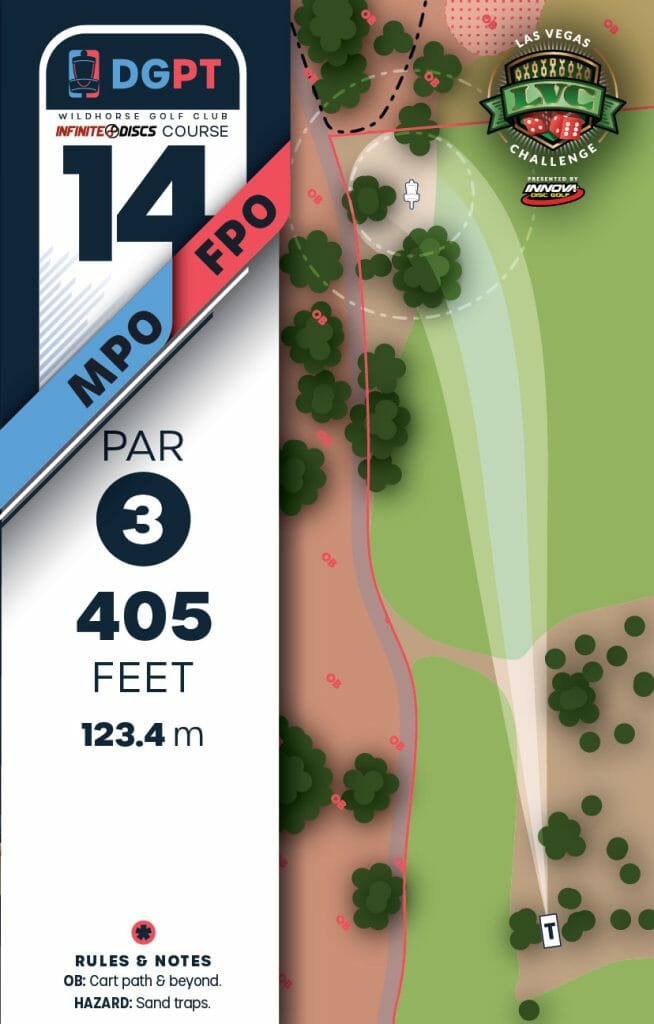
Natalie Ryan was the only player in the field to birdie hole 14. The 405-foot par three with OB everywhere was simply too long for everyone but Ryan. She was the only player to put her drive inside the circle. She canned the putt from 27 feet.

Niche sport disc golf is stepping up a gear in Tasmania, with the first statewide tour getting underway this year.
On Sunday, the first ever Crayfish Cup gets underway at Burnie’s new disc golf course on View Road, the second in a series of events counting towards a Tasmanian championship.
The Burnie club was only formed last year and will host further events as part of the Disc Golf Tasmania Tour.
The Hobart Disc Golf Club will also stage a series of events at Poimena Reserve and there will also be two events at the Wallaby Hill course in the Huon Valley.
The Burnie course was designed by a pioneer and legend of the sport in Tasmania, Michael Rubock, who also helped design the first course at Poimena Reserve — the first ever in Australia.
His son, Sam Rubock, is tournament director of the Crayfish Cup as well as one of the contenders to win the men’s advanced title.
“They actually live in the creek at the edge of the course.
“The club has already got 30 members and a lot more are using the course who are yet to join the club, so it’s started well.
“The state tour is a great new development — we just need the Launceston City Council to get on board now and help establish a course in that city.
“There are plenty of players there, and they travel to Hobart or Burnie to play and compete. It would be nice to have Lonnie (Launceston) as part of the tour.”
The humble flying disc has itself come a long way from people throwing would-be prototypes like cake pans or a pie tin lid at the beach.
Today, wind-tunnel testing, advanced design and new materials mean that an advanced player like Sam carries more than 20 different discs in a specialised backpack for tournament play.
“We have discs that are like putters, mid-rangers like a 5 or 7-iron in traditional golf, drivers that fly a long way but can go offline,” Mr Rubock said, thumbing through his specialised frisbee golf bag.
“There are even new discs that are perfect for those who have ‘frisbee dogs’. Discs that are chew-proof so that everyone who loves a flying disc can join in.”
The Crayfish Cup throws off at 9am on Sunday and is free for spectators. Live scores will also be available on the Burnie Disc Golf Facebook page.